
 Japan With Adi

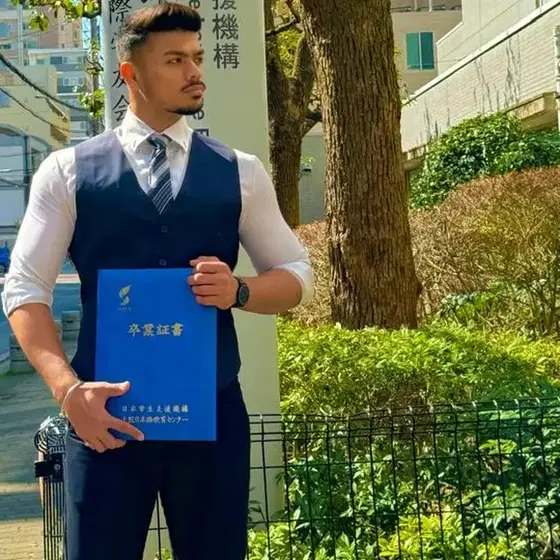
Three Indian students who went to Japan on the MEXT Specialized Training College scholarship straight after class 12 explain how they applied, prepared for the exam and interview, and what life is like now.

"IIT didn't happen. But MEXT did."
That's how one of the three students I sat down with in Japan summed up his story. All three were 18 to 20 years old, from Assam, Saharanpur and Varanasi, and all three came to Japan on the MEXT Specialized Training College (STC) scholarship, two of them straight after class 12, before their board results were even out.
When I went to Japan, most Indian MEXT scholars were 26, 27, 28. These guys are 18. Here's what they told me, so you can do it too.
What is the MEXT STC scholarship? 🎓
MEXT is the Japanese government's scholarship. The Specialized Training College track is for students who've finished class 12. You spend one year learning Japanese, then study a practical, career-focused course at a specialised training college (senmon gakkō) in Japan, with tuition paid and a monthly allowance.
The three students are studying information engineering, information processing and game programming, in Osaka and Kyoto.
In India you apply through the Embassy of Japan. The stages are document screening, a written exam, an interview, and final selection in Japan. Check the embassy's page for this year's dates, age limit and marks requirement.
You can apply while you're still in class 12
This surprised a lot of my viewers. The application usually opens around April, before CBSE results come out in May. So how did they apply?
With a certificate of expected graduation from their school, saying they'd finish their exams by March. Their final marksheets went in later, once the results came. One of them first wrote "May" as his graduation date. The embassy called and asked him to change it to March, when his exams ended, and send the results later.
So if you're in class 11 right now, this is your time. Two of them started preparing in class 11.
How they prepared for the written exam ✍️
The STC exam covers mathematics, English and Japanese. Their honest advice:
- English is very manageable.
- Maths is class 11 and 12 level. Get the previous years' papers, do a trend analysis of which chapters come up most, and study those chapters from YouTube or alongside your school syllabus. "STC maths is easy" was the consensus.
- Japanese isn't required beforehand, but it helps. One of them only learned to write his name and a few words like "cat", and even that helped. Another wrote that his Japanese section went well, and it made up for an average maths paper.
Either your Japanese should be strong, or your maths and English should be strong. Ideally all three.
The interview 🗣️
The interview isn't technical. They ask about you, your motivation and your plans. Two questions all three remembered from the application and interview:
- What triggered your interest in Japan?
- How will you contribute to India and Japan?
Their answers were honest and specific:
- One wrote that Japan's education is skill-based and practical, while in India it often feels like "fill the exam, pass the semester, go home". He wants to work for a company that bridges India and Japan.
- One wrote about the Japanese games that inspired him, and his dream of becoming a game developer and someday launching his own title, maybe India–Japan games, because India's gaming industry is still small.
- One wrote about AI and data, connected to his field, after reading articles about AI companies expanding in Japan.
The common thread: they did their own research. Don't just ask an AI tool to write your MEXT answers. Read about your field, Japan and the industry, and write what's true for you.
One of them messaged me after he cleared the written exam, and we did two long mock interview sessions on Zoom. He told me some of the questions we practised came up in the real interview. Practise out loud before the interview. Get a friend, a senior or a mentor to grill you.
Does the interview or the written exam matter more? "Both," they said. "But if you clear the written, the interview isn't that hard, as long as you're prepared."
Selection: don't celebrate too early
After the interview you may be told you've cleared the first screening, but it's not final until MEXT confirms placement. Keep checking your email every morning, and keep your documents ready.
What they think of Japan so far 🇯🇵
- "It's even more beautiful than the vlogs."
- "The air is so clean. In India my nose was always blocked. Here, not once."
- "Society is very organised. People respect each other and respect the rules." (Even crossing the road: in India you look ten ways; in Japan you just follow the signals.)
Their plans
One year of Japanese first, then college. After that, some want to work in Japan, one wants to move to a national university, and one wants to work for a while and then return to India if a good opportunity comes. As they said: who knows exactly what life brings? But they're starting their careers at 18.
My advice on jobs, which I gave them too: fields like IT and game tech have huge scope in Japan, at multinationals, startups, foreign companies and big Japanese firms. Just avoid "black companies" (burakku kigyō, exploitative employers). Research every employer before you sign.
"There's too much competition"
Their answer: "There's competition everywhere, in India too. There was competition in our year as well, and we still made it."
And remember: there may be only a handful of seats, but you only need one.
What to do now ✅
- Read the MEXT STC guidelines on the Embassy of Japan in India's website. Read them many times.
- Start previous-years' maths papers and do the trend analysis.
- Start Japanese, even basic hiragana and katakana. Our free course is a good start.
- Think deeply about why Japan and how you'll connect India and Japan. Write it down.
- Practise interviews out loud.
If you want structured help for MEXT (STC, KOSEN, undergraduate) and other scholarships, including past papers and interview practice, look at FS – Future's Scholar. And read our guide to studying in Japan for free.
